
By Bruce G. Kreeger — researched and drafted with AI assistance
The Jewish covenant of Shabbat, rooted in the Genesis account of creation, established a pattern of sacred rest that other faiths, Christianity most visibly, later drew on and reshaped for their own theology. Charlie Kirk’s final book is a recent example of that borrowing: an argument for rest built on a foundation that is, at its root, a Jewish covenant.
I recently read Kirk’s book myself, and it’s what prompted me to write this down.
In the Beginning
“In the beginning,” Bereshit, is where the pattern starts. Genesis 1 doesn’t end with the creation of the world; it ends with the seventh day, when God rests. That’s not incidental. Rest is written into the architecture of creation itself, right alongside light, land, and life. The world isn’t complete until there is a day set apart to stop.
A Sign of the Covenant
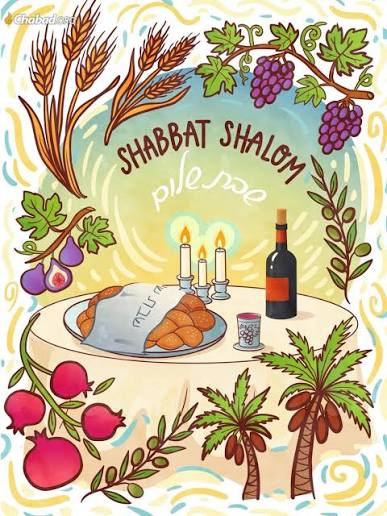
What makes Shabbat different from a general instinct toward rest is that it’s covenantal. Exodus 31:16-17 states this plainly: Shabbat is a sign of the covenant between God and Israel, to be observed throughout every generation. It isn’t a suggestion or a wellness practice, it’s law, memory, and identity fused into a single weekly act. For Jews, Shabbat has functioned as something like spiritual glue, holding communities together through exile, persecution, and dispersion, when almost everything else was taken from them.
That’s the piece worth insisting on: the covenant is Jewish. What happened next, in other traditions, is something else, adaptation, not inheritance of the covenant itself.
A Personal Anchor
I think about this covenant in personal terms, not just historical ones. During a particularly trying time in my life, I told a Chabad rabbi that I thought I was a bad Jew. He sat me down and asked, “Bruce, do you take Hashem into your heart, your mind, and your soul?” I told him yes. He said that was all I needed to do to be a good Jew. That answer has stayed with me through my entire life.
What the rabbi was pointing me back to, whether he named it or not, is the Shema, the line recited at morning and evening services and the words traditionally spoken at the end of a Jewish life, from Deuteronomy 6:5:
שְׁמַע יִשְׂרָאֵל יְהוָה אֱלֹהֵינוּ יְהוָה אֶחָד
Sh’ma Yisrael, Adonai Eloheinu, Adonai Echad
“Hear, O Israel: the LORD our God, the LORD is One.”
וְאָהַבְתָּ אֵת יְהוָה אֱלֹהֶיךָ בְּכָל־לְבָבְךָ וּבְכָל־נַפְשְׁךָ וּבְכָל־מְאֹדֶךָ
V’ahavta et Adonai Elohecha, b’chol levav’cha, uv’chol nafsh’cha, uv’chol me’odecha
“You shall love the LORD your God with all your heart, with all your soul, and with all your might.”
Twice a day, every day, that is the line Jewish prayer returns to. Heart, soul, might, the rabbi’s own wording to me, heart, mind, and soul, echoes it almost exactly. He wasn’t handing me a new standard. He was handing me back the oldest one, the same words recited at the start and close of every day and, traditionally, at the very end of a life. It cuts to the same place the covenant itself points to. Shabbat, the mitzvot, all of Jewish practice, matter deeply, but they are the expression of a relationship, not a scorecard kept apart from it. The rabbi wasn’t dismissing observance; he was reminding me what observance is for. That distinction, between covenant as checklist and covenant as bond, is the same one worth holding onto when reading how someone outside the tradition, like Charlie Kirk, comes to encounter and adapt it.
What Other Faiths Did With It
Christianity kept the idea that rest is sacred but moved the day and changed the reasoning. Sunday observance commemorates the resurrection, not the seventh day of creation, and many Christian traditions, particularly Protestant ones, treat the Sabbath command as fulfilled in Christ rather than as a binding weekly obligation. Islam set aside Friday for communal prayer, but without the same structure of full rest or covenant sign that defines Shabbat.
So the pattern traveled. The covenant did not.
How Charlie Kirk Actually Came to This
The real story behind Kirk’s book is more layered than a single influence. It was Pastor David Engelhardt, of Kings Church in New York City, who first pushed Kirk toward Sabbath observance, over lunch in the summer of 2021, when Kirk was under heavy stress and struggling to sleep. Engelhardt told him plainly to block out twenty-four hours a week to be with God and family. Kirk pushed back at first, then adopted the practice within a couple of months and, by his own account, stuck with it rigorously from there.
Dennis Prager’s role came after that foundation was already laid. Prager was a close friend and mentor to Kirk for years before the book existed, their organizations, PragerU and Turning Point USA, grew up together, and Kirk described the two groups as the Air Force and the Army of the young conservative movement. As Kirk deepened his Sabbath practice and researched the theology behind it, Prager became the person he turned to, and some accounts, including comments from Erika Kirk, credit Prager directly with advising Charlie to begin observing the Sabbath in 2021, so the two accounts of how it started overlap rather than fully agree.
What is not in dispute is how personal the connection became. Kirk brought Prager the manuscript of the book himself, in person, while Prager was hospitalized recovering from a severe fall in November 2024 that left him paralyzed below the shoulders. Kirk dedicated the finished book to him. The two also appeared together publicly to discuss the Sabbath before Kirk’s death.
One Prager idea in particular is worth naming, because it shows the kind of thinking Kirk was absorbing: in a 2014 piece for National Review, Prager argued that the Sabbath commandment was historically remarkable because it extended rest and dignity even to animals, calling it, in his telling, the first national law in history on behalf of animals. That is the kind of close reading of the original commandment that Kirk was working from as he built his own case for it.
Charlie Kirk’s Book as a Case in Point
Kirk builds his entire case for rest on the Genesis creation pattern, the same “in the beginning” foundation that grounds Shabbat itself. He writes about what Shabbat has meant to the Jewish people specifically, describing it as something closer to spiritual glue than ritual, a thread that held a people together across history. He clearly understood, and respected, where the idea came from.
But his own application of it is a Christian one. His focus lands on Sunday observance and on rest as a spiritually vital practice for a Christian audience, not on halachic Shabbat as Judaism has kept it. That’s the adaptation in action, a Christian writer, in the final years of his life, reaching back to a Jewish covenant, guided first by a pastor and then by a Jewish mentor, and reshaping the practice for his own theology and his own readers.
The Point
Shabbat’s importance isn’t diluted by the fact that other faiths have drawn on it, if anything, that borrowing is evidence of how foundational the original covenant is. But precision matters here. The claim isn’t that Shabbat is “extremely important to all faiths” in equal measure. The claim is sharper than that: the covenant is Jewish, the pattern it established has proven durable enough that other traditions keep returning to it, and Charlie Kirk’s final book, shaped along the way by a Christian pastor and a Jewish mentor, is simply the most recent, most visible example of that return. And underneath all of it, for me, is a rabbi’s question that never really leaves you, itself rooted in the Shema: do you take Hashem into your heart, your mind, and your soul. Everything else, including how the world outside Judaism comes to understand and borrow from the covenant, follows from that.
